| Design effect | What it means | Planning use |
|---|---|---|
| Sealed hub unit | Hub motors are sealed units and typically low maintenance. | Expect little routine servicing. Bearings are the most wearable part, so they are what to check as the motor ages. |
| Service life | Roughly 10,000 miles is the general guidance for a hub motor. | Use it as a rough budgeting figure for bearing work or a replacement motor, not as a guarantee. |
| Torque | A typical rear hub motor produces around 40–70 Nm. | Use it as a reference range when reading motor specifications. |
| Geared or direct drive | Geared hubs use internal gear reduction for better low-speed torque. Direct drive hubs skip the gearbox. | Favour geared if slow starts and climbs matter most to you. |
| Brushless operation | Brushless motors offer quiet operation, longer life and smoother power output. | This is why almost every modern e-bike motor is built this way. |
These figures come from a bike maker’s guide to how electric bikes work and a retailer’s guide to e-bike motors.
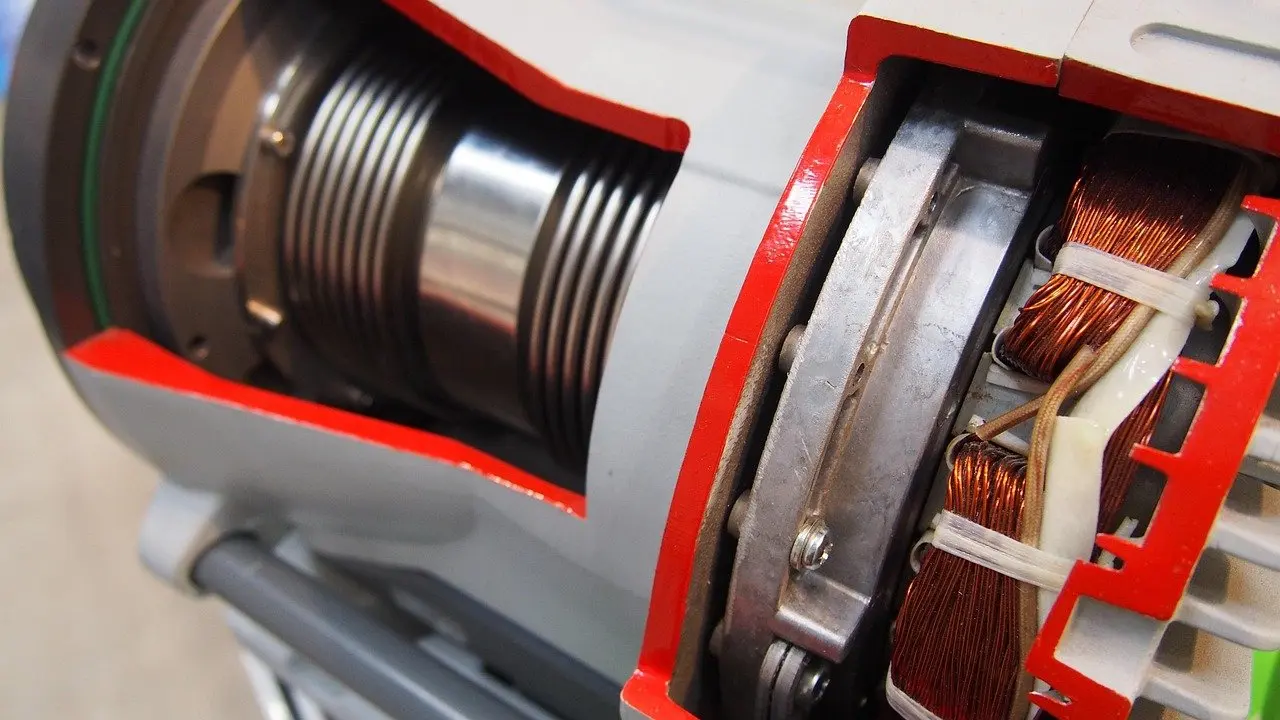
How does an ebike hub motor work? Stationary copper coils, fed current by a controller, create a rotating magnetic field that pulls permanent magnets around, and the turning rotor spins the whole hub.
The design explains most of what owners notice in daily use, from the low servicing needs to the way torque is delivered. For the wider choice between motor layouts, see hub motor vs mid drive.
What the hub design means in use
A hub motor puts everything inside the wheel, so its behaviour follows from a few physical choices: sealed construction, brushless operation and where the motor sits on the bike. Understanding those choices is more useful than memorising a spec sheet.
Maintenance and lifespan
Because a hub motor is a sealed unit, there is very little for an owner to adjust. Raleigh’s guide describes hub motors as super low maintenance and gives roughly 10,000 miles as the general expectation for the motor, with the bearings being the most wearable part. The practical reading is simple. If the wheel starts to feel rough or noisy as the miles build up, suspect the bearings first rather than the electrical parts.
Brushless construction supports that low-maintenance profile. A brushless motor offers quiet operation, longer life and smoother power output. There is no sliding electrical contact inside to wear down, which is a large part of why sealing the whole unit is practical.
Rear hub or front hub
Where the motor sits changes how the bike feels. A typical rear hub motor produces around 40–70 Nm of torque, and it pushes from the back wheel, where the rider’s weight and traction are concentrated. A front hub motor works differently. According to one electric bike guide, front hubs give a pulling sensation because they drive the front wheel directly.
If you want the more familiar feeling of being pushed forward, a rear hub is the more natural fit. A front hub suits riders who are comfortable with the bike being pulled along.
Heat and slow climbing
The main weakness of a hub motor shows up at low speed. A direct drive hub motor climbing slowly converts a lot of its power into heat instead of forward motion. A geared hub counters this with internal reduction, which gives better low-speed torque.
Use these rules of thumb to decide:
- Choose geared if your rides involve frequent stops, slow starts or hills, because the gear reduction is aimed at low-speed torque.
- Consider direct drive if you prefer a design without a gearbox, and accept that long slow climbs are where it wastes the most power as heat.
- Compare the full trade-offs in our guide to geared hub motor vs direct drive before committing to a kit or a bike.
Stator and rotor inside the hub
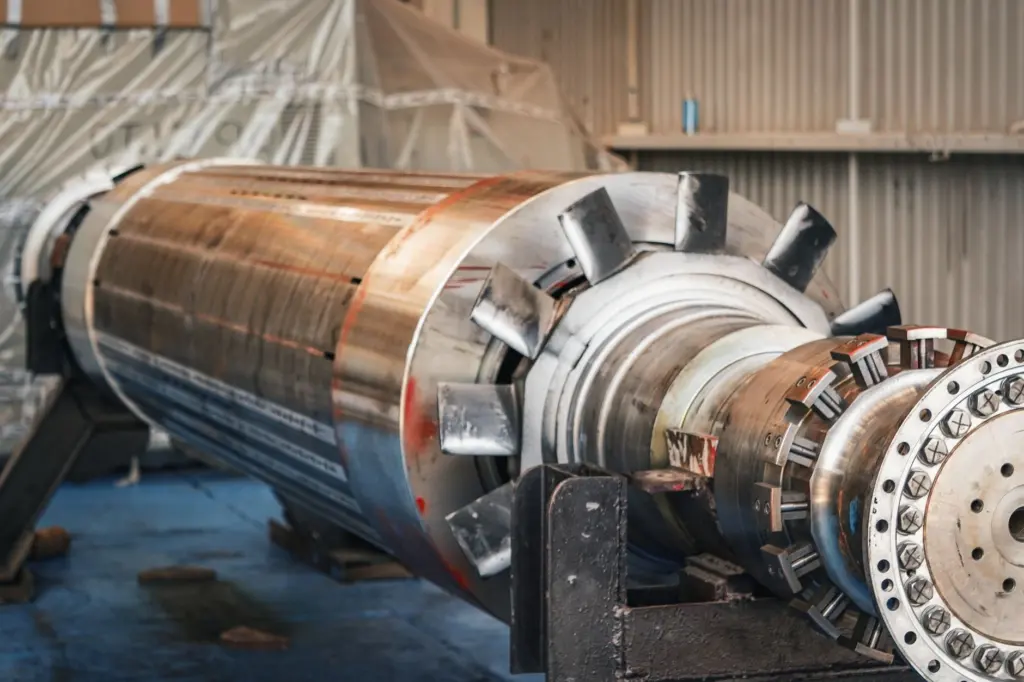
The stator and rotor are the two halves of the motor, and the hub design makes one of them visible as the wheel itself. The stator is a ring of stationary copper coils. The rotor is a set of permanent magnets. The stator stays still and carries the electrical current, while the magnets are what spin.
In a hub motor the rotor itself turns, and that causes the entire motor housing, the hub, to turn with it. The wheel is attached to that housing, so the wheel rotates without any chain or belt between motor and tyre. This is the key contrast with a mid-drive motor, where the axle turns to generate torque. If that layout interests you, read how does a mid drive ebike motor work.

Since the coils are fixed, current reaches them through wires rather than through any sliding contact. That is the whole point of the brushless arrangement and the reason this layout suits a sealed wheel hub.
Why brushless won
Today’s electric bike motor systems use brushless DC motors almost exclusively. Older brushed designs relied on brushes that made the motor less efficient and tended to wear out over time. Moving the coils to the stationary side and the magnets to the moving side removed that wear point.
Controller, current and commutation
The controller is what turns the stator into a working motor. When it sends current through the coils, it creates a rotating magnetic field that spins the rotor. The magnets follow the moving field, and because the rotor is attached to the hub, that following motion becomes wheel rotation.
For this to work smoothly, the field has to be timed against where the magnets are. That is why the controller needs information about rotor position, and hall sensors on the stator are the usual way of providing it. The controller then switches current between coil groups in sequence, which is what produces smooth rotation rather than a jerky or stalled motor.
Beyond switching the coils, the controller acts as the central command. It receives input from the rider’s controls and sensors, sends signals to the battery, and manages the vehicle’s data. A pedal sensor feeds into this. With a cadence sensor, the system engages the motor as soon as you begin pedalling, so the controller’s timing of the coil current responds directly to what you are doing.
What to check when something goes wrong
A sealed hub with a controller gives you a clear division of likely causes:
- Rough or noisy rotation points towards bearings, the most wearable part of the hub.
- No assistance at all points towards the controller, sensor inputs or battery signalling rather than the stator and rotor.
- Weak climbing with a hot hub fits the low-speed heat behaviour of direct drive described earlier, so consider whether the motor type suits your hills.
Frequently asked questions
What does the e-bike controller do besides driving the coils?
Controllers turn the system on and off and set the level of motor assistance. They also take input from the bike and pass signals to the battery.
When does the motor start helping?
With a cadence sensor, the motor engages once you begin pedalling, so assistance begins with the first pedal movement rather than after a delay.
Why did older motors use brushes, and why don’t modern ones?
Brushed motors depended on brushes, which made them less efficient and tended to wear out. Modern e-bike systems use brushless DC motors almost exclusively because they are quieter, last longer and deliver smoother power.