Will an ebike conversion kit fit my bike? Usually yes, provided the dropout width, axle, fork material, brakes and tyre clearance all suit the kit. Measure the dropouts first, then work through the other checks in order.
The checks below follow the order of a fit inspection, from frame condition to clearance. The wider overview is in the bicycle electric conversion kit guide. If you have not yet picked a kit, read how to choose an ebike conversion kit alongside this page.
Frame condition and bike type
Most mountain, hybrid, commuter and road bikes can take some type of conversion kit, according to a kit compatibility checklist. The wording “some type” matters. Bike type only tells you a kit is possible, and the measurements below decide which kit.
Frame condition comes before any measuring. The same checklist says cracked, badly rusted, bent or damaged-carbon frames should not be converted, because a motor adds load to a frame that is already compromised. If your frame is sound, move on. If it is not, a different donor bike is the better route, and the guide to the best bike to convert to electric covers what to look for.
Measuring dropout width
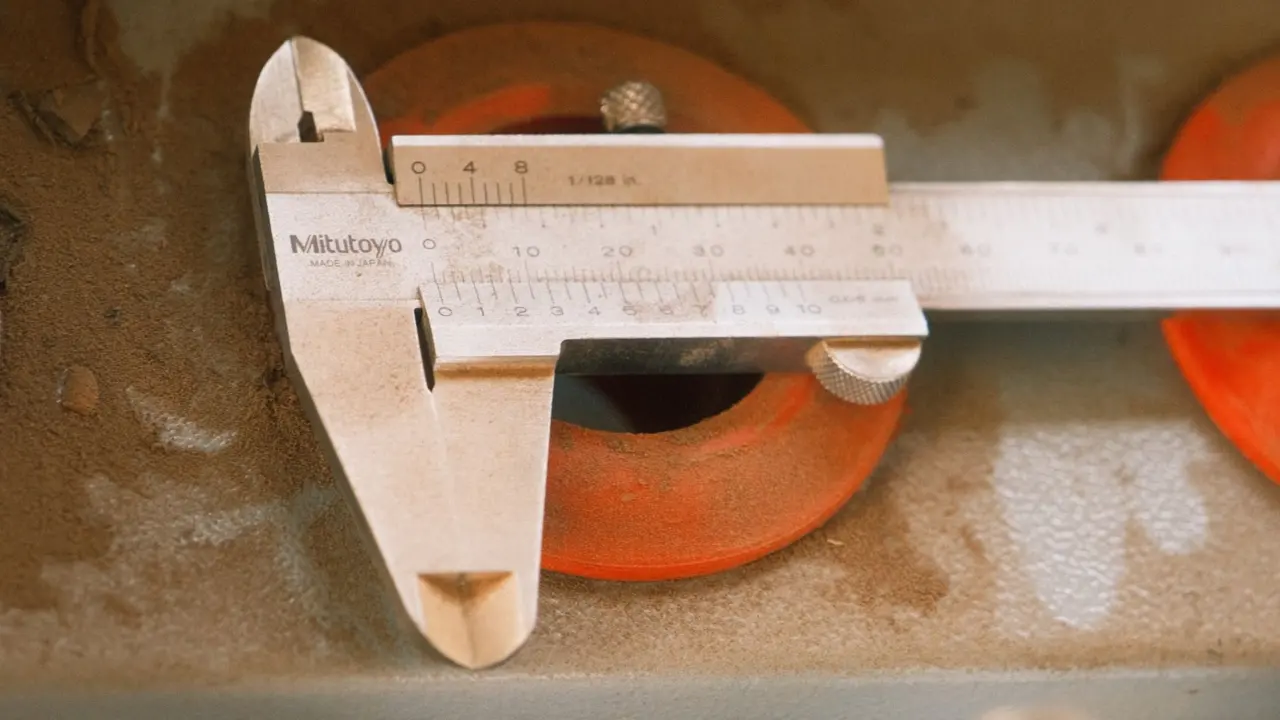
Dropout width is the gap between the fork or frame ends where the wheel axle sits, and a hub motor must match it. Measure rather than trust a spec sheet, because a manufacturer’s frame guide notes that makers often quote the design width and used frames often differ from it.
- Use the right tool. Take a caliper or a spacing gauge to the dropouts.
- Measure at the axle centreline. Read the gap at the centre of the axle position, not at the tips of the slots.
- Take three readings. Repeat the measurement at different points along the slots and compare them.
- Act on any spread. If the readings differ by more than about 1 mm, the frame may be bent and should be checked before you fit a motor.
Compare the result with the spacing your kit is built for.
| Position | Common spacing | Planning use |
|---|---|---|
| Front fork | About 100 mm; front motors usually target 100 mm forks | Order a front kit only if your measured gap matches the kit’s stated fork width. |
| Rear, standard bike | 130 mm or 135 mm are common; rear motors are built for 130 mm, 135 mm or wider | Pick the rear kit whose stated width matches your reading, not a nearby size. |
| Rear, fat bike | 170 mm or 190 mm are common; some frames use 150 mm | Fat bikes need a kit made for their wider spacing. |
Figures are drawn from a kit compatibility checklist and a manufacturer’s fat-bike frame guide.
Axle standard and wheel size
The motor axle must sit properly in the dropout slot. The same manufacturer guide warns that a 12 mm axle sitting in a 14 mm slot is not positively located by the slot alone. If your slot is wider than the axle, ask the kit maker how the axle will be held in place before you order.
Quick-release and bolt-on dropouts are the open-ended type that the kits are designed around. A UK kit maker’s fitting guide says its standard kit does not yet cover through-axle bikes, which it describes as higher-priced models made since 2018. It lists a through-axle version as under development. If your bike has a through axle, check that a kit explicitly supports it.
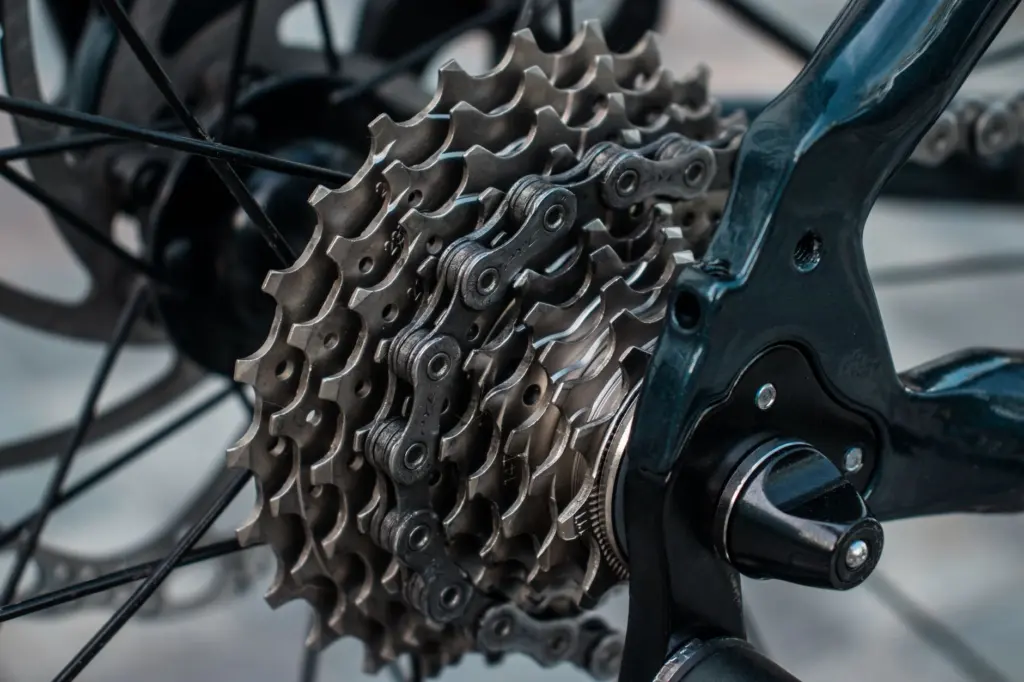
Wheel size is set by rim diameter, and the same fitting guide gives these rim sizes: 700c is 622 mm, 27.5 in is 584 mm and 26 in is 559 mm. Read the marking on your tyre sidewall to find yours. A marking such as 622-32 identifies a 622 mm 700c wheel.
Fork and frame material
Material decides how much load the dropouts can safely take. Can a hub motor go on a carbon or aluminium fork? Aluminium can, with a torque arm, while carbon needs written approval. The compatibility checklist rates the common materials as follows.
- Steel or chromoly: strong at the dropouts and easy to inspect, so it is the most straightforward material for a hub motor.
- Aluminium: capable with a torque arm. Treat the arm as a required part of the install.
- Carbon: only with written frame-and-system approval, and always defer to the frame maker’s guidance. Without that approval, choose another bike.
- Titanium: check with the frame builder first.
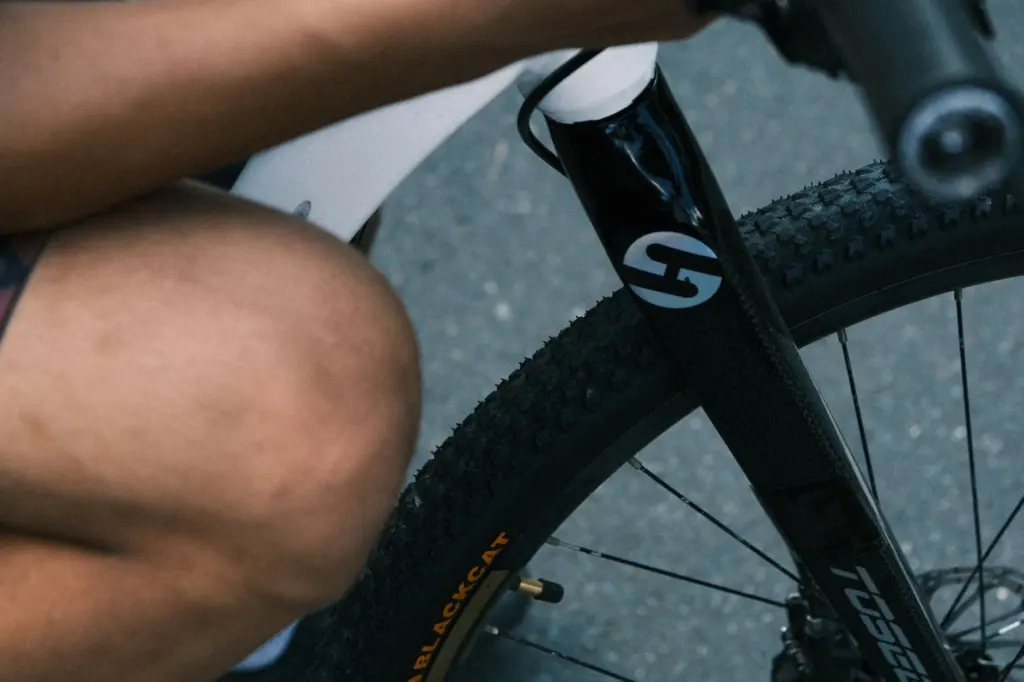
If you cannot identify the material, ask the frame maker rather than guess. A written reply is also the document a carbon fork would need.
Do you need a torque arm?
Whether you need a torque arm depends on motor torque and on what the dropouts are made of. A torque arm stops the axle turning in the dropout when the motor drives, and the compatibility checklist makes one a condition for aluminium.
The torque figure matters more as power rises. For high-torque motors, the manufacturer’s frame guide recommends two torque arms, ideally one on each side of the axle and anchored to sturdy frame members. It says redundancy is not optional for a motor rated near 120 N·m of wheel torque.
In practice, a gentler motor on a steel fork follows the kit manual. An aluminium frame or a high-torque motor means fitting the arm or arms properly, on both sides where the maker advises.
Brake type and fitting
Brake type does affect fitting. The UK kit maker’s fitting guide works with v-brake, cantilever, caliper and disc brakes, but not roller brakes, because roller brakes cannot be fitted to the motor. A bike with roller brakes is therefore the wrong donor for that kit.
Braking performance matters as much as compatibility. The same guide says the extra weight and faster potential speeds mean the brakes need to work harder, and it recommends upgrading single-pivot calipers to double-pivot. If you have disc brakes, confirm that your chosen motor wheel supports your brake mounting before ordering. If you have old rim brakes, budget for the upgrade as part of the conversion.
Tyre and frame clearance
Clearance is the last check, and it is worth doing with the wheel loaded. The manufacturer guide gives a practical minimum of several millimetres on each side of the tyre, with more allowance at the chainstay. It suggests testing with a rider aboard, or by compressing the frame to approximate riding load.
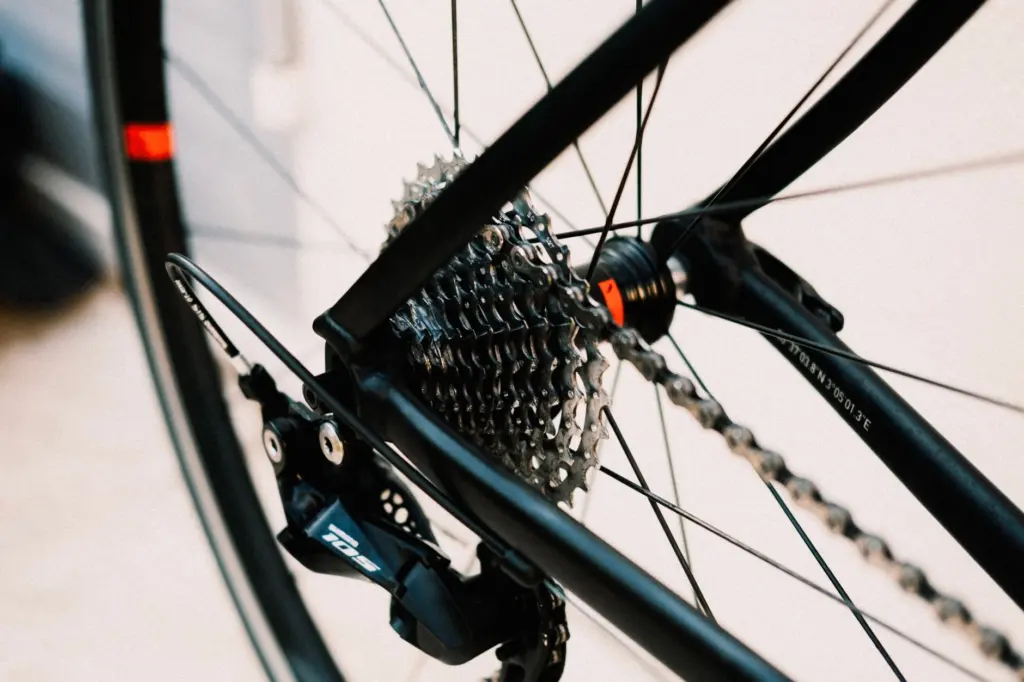
Check the gear side as well. With the motor wheel seated, the chain, cassette and derailleur should run freely, and nothing should touch the tyre or the frame as the wheel turns.
If something does not fit
- Wheel will not seat in the dropouts: re-measure at the axle centreline and compare your three readings. A spread above about 1 mm points to a frame check, and a clean but different width points to a different kit.
- Tyre rubs in a loaded test: look for a narrower tyre or a different bike, not a tighter fit.
- Fork material is uncertain: write to the frame maker and wait for the reply before buying.
- Several checks fail at once: compare your options in the guide to how to choose an ebike conversion kit or consider a different donor bike.
Frequently asked questions
| Question | Answer |
|---|---|
| Is a converted bike legal on UK roads? | The finished bike must stay within 250 W and 15.5 mph to count as a normal bicycle on UK roads, according to a kit compatibility checklist. |
| Can a folding bike be converted? | Only with a kit designed for it. A UK kit maker says its conversion kits shouldn’t be used for folding bikes unless specifically designed to be. |
| Can the battery be fixed with cable ties? | No. The same kit maker says the battery cannot be attached with cable ties because they are not strong enough, so use the supplied mount. |
| How is the motor wheel matched to my bike? | It is custom built to the wheel size you give when ordering, so read your tyre markings before you place the order. |