| Effect of crank-driven power | What happens | Planning use |
|---|---|---|
| Low-speed pulling | The motor uses the bike’s own gears, so it has plenty of torque at low speed. | Choose a mid-drive for hilly routes or loaded riding, and use a low gear for starts and climbs. |
| Load on the drivetrain | Power goes straight into the chain or belt. Leaning on the motor early from a standstill reduces the lifespan of the motor and drivetrain. | Start in a low gear and let the bike get moving before asking for strong assist. |
| Changing gear | A cassette and derailleur system should only be shifted while the bike is moving. | Pick the gear before stopping, not after. |
| Assist feel | Most mid-drive motors use a torque sensor, which gives a smoother ride than a cadence sensor. | Favour torque-sensing systems when comparing models. |
Figures above come from KWSS Euren’s mid-drive overview and Heybike’s mid-drive riding guide.
How does a mid drive ebike motor work? It sits at the bottom bracket and feeds power into the chain, so the bike’s own gears and drivetrain decide how it climbs, shifts and wears.
For a side-by-side look at motor layouts, the guide to hub motor vs mid drive sets out the wider choice. This page stays on the mid-drive as a system and on what that means for shifting and chain life.
What crank-driven power changes for the rider
A mid-drive does not push the wheel directly. It adds its power at the cranks, so everything downstream (chain, cassette, derailleur) works as part of the motor system. That single design choice explains most of the practical differences a rider notices.
- Strong low-speed pull. KWSS Euren notes that a mid-drive uses your gears, so it has plenty of torque at low speed. It also describes the motor as delivering high torque at low speed while drawing high current. The practical reading: steep starts and slow climbs suit a mid-drive, provided the rider selects an easy gear.
- Efficient transfer. Heybike points out that mid-drive motors interact directly with the drivetrain, resulting in a more efficient power transfer. That efficiency depends on the gearing being used sensibly.
- Riding technique matters. Because the motor and the rider both load the same chain, careless shifting or heavy assist at the wrong moment has a direct effect on component life. The sections below cover those habits.
- Steadier handling. The motor sits low and central, a position KWSS Euren says makes steering more stable. Frame balance is a side benefit of the layout, not its main purpose.
Chain and cassette wear on a mid-drive
A mid-drive sends the motor’s output through the same chain and cassette that carry the rider’s own effort. That means the drivetrain is the part of the bike that takes the extra load, in contrast to designs that act on the wheel itself. Readers who want the contrast can read how does an ebike hub motor work.
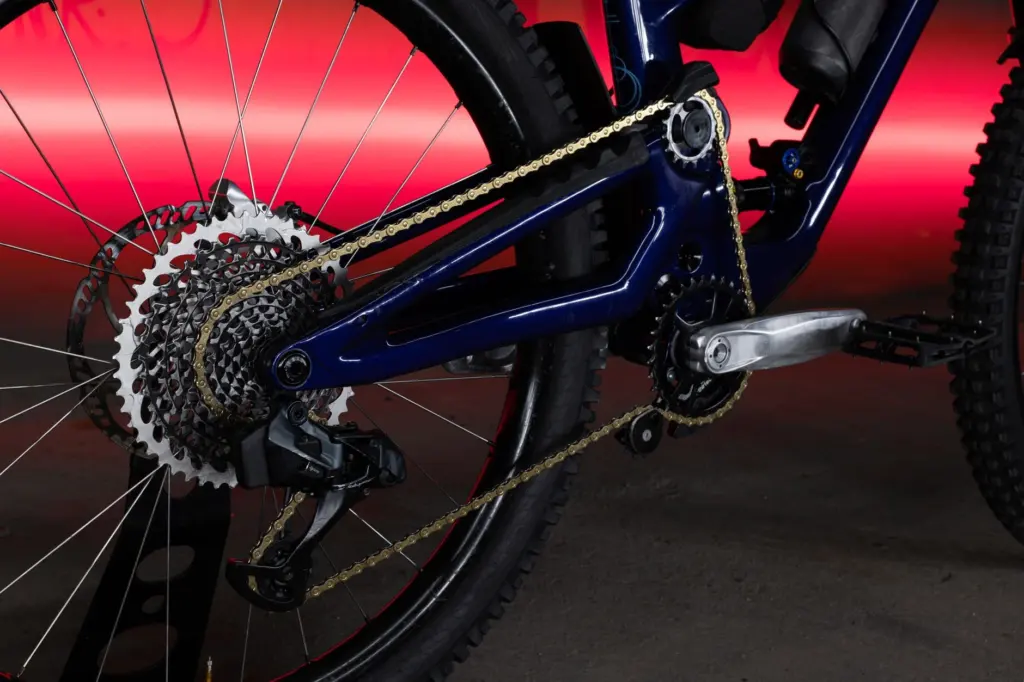
KWSS Euren explains that the power goes straight to the chain or belt, rather than into the front or rear wheel. Combine that with high torque at low speed and the moments of greatest strain become clear: pulling away from a stop, climbing in a gear that is too hard, and applying strong assist at low cadence.
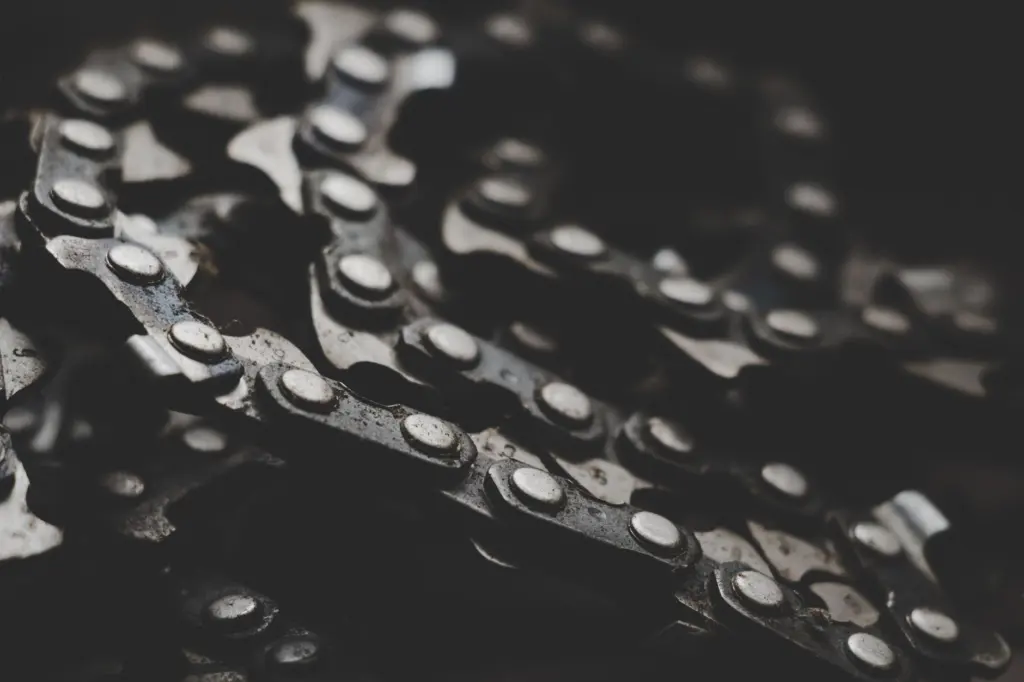
Heybike’s guidance is specific about one habit. Using the motor heavily as soon as the bike leaves a standstill, it says, will reduce the lifespan of the motor and drivetrain. The supplied guidance does not put a mileage figure on chain or cassette life, so wear is best treated as a matter of habit and inspection rather than a fixed schedule.
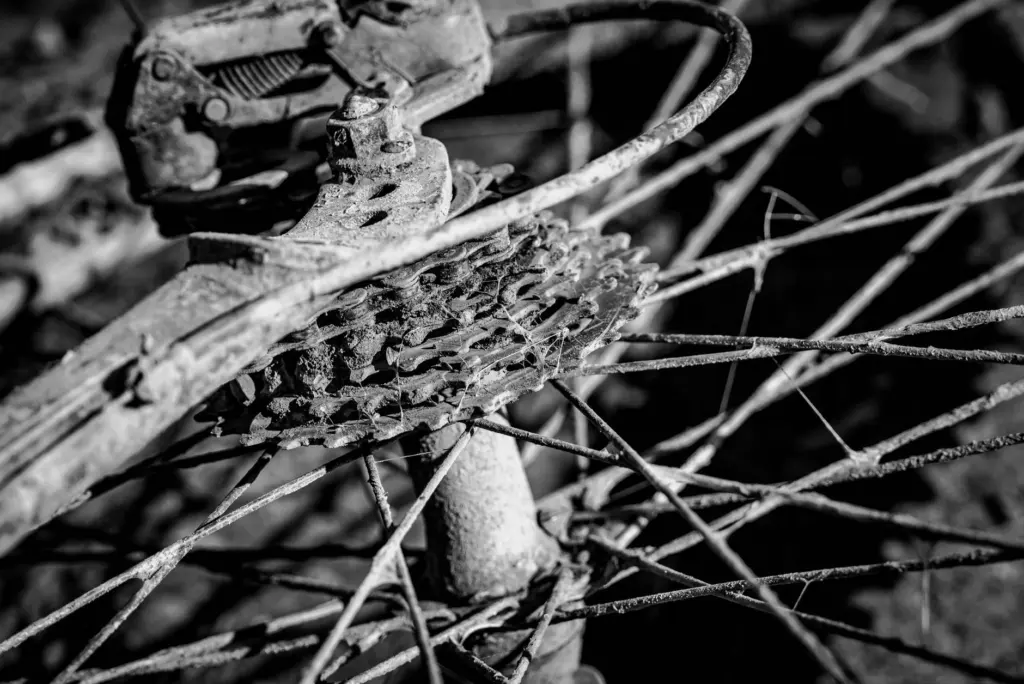
Practical decisions follow from this:
- Treat the chain and cassette as a pair. They mesh and wear together, so inspect both when either looks tired.
- Ease off before hard efforts. Choose a lower gear ahead of a climb instead of forcing the motor to haul a tall gear.
- Expect to maintain more often than on a hub-motor bike. This follows from the motor loading the chain directly, though no mileage interval is stated in the supplied guidance.
Shifting habits that protect the drivetrain
Good shifting on a mid-drive is mostly about timing. The rider chooses the gear, the motor supplies the push, and the chain should never be asked to change sprockets under a heavy, sudden load.
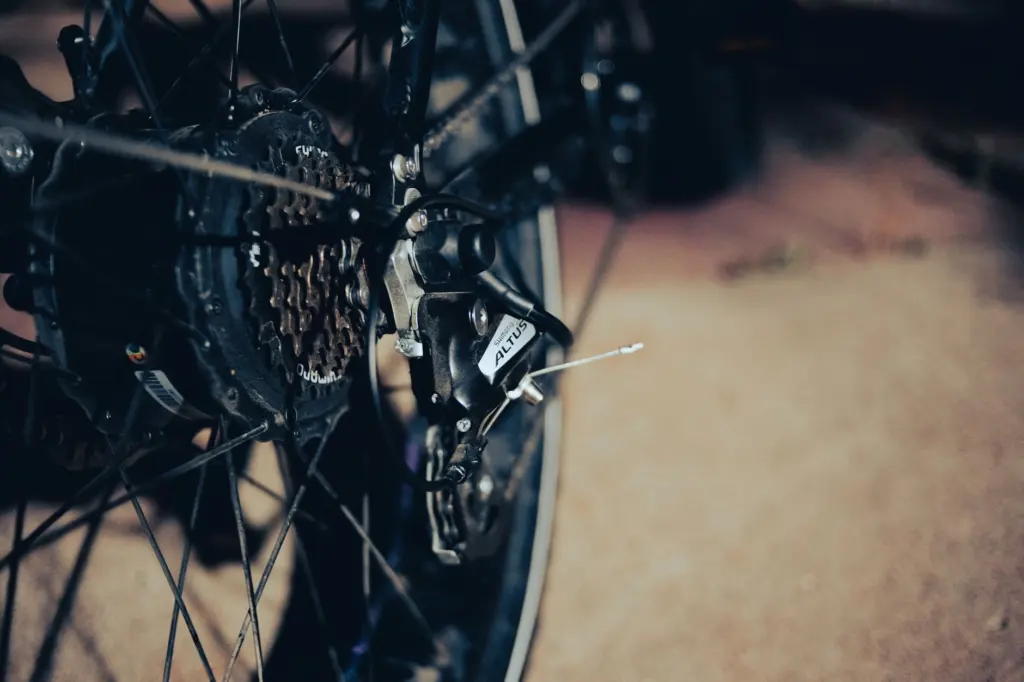
- Start in a low gear. Heybike advises making sure the bike is in low gear before you start moving. This pairs naturally with the torque available at low speed.
- Shift only while moving. With a cassette and derailleur system, gears should only be changed while the bike is in motion. A derailleur cannot move the chain across sprockets while the cranks are stationary.
- Let the motor back off during the shift. The same guide says the mid-drive motor will temporarily reduce power while the gear shift occurs. Riders can help by easing pedal pressure at the moment of the change rather than fighting that brief reduction.
- Shift early on hills. Dropping to an easier gear before the gradient bites keeps the motor working at a manageable load and the chain under less strain.
These habits cost nothing and apply to every cassette-and-derailleur mid-drive. A rider who wants to compare entirely different layouts, such as a friction drive ebike motor, will find that those designs ask for different habits.
How the motor delivers power
Motor at the bottom bracket
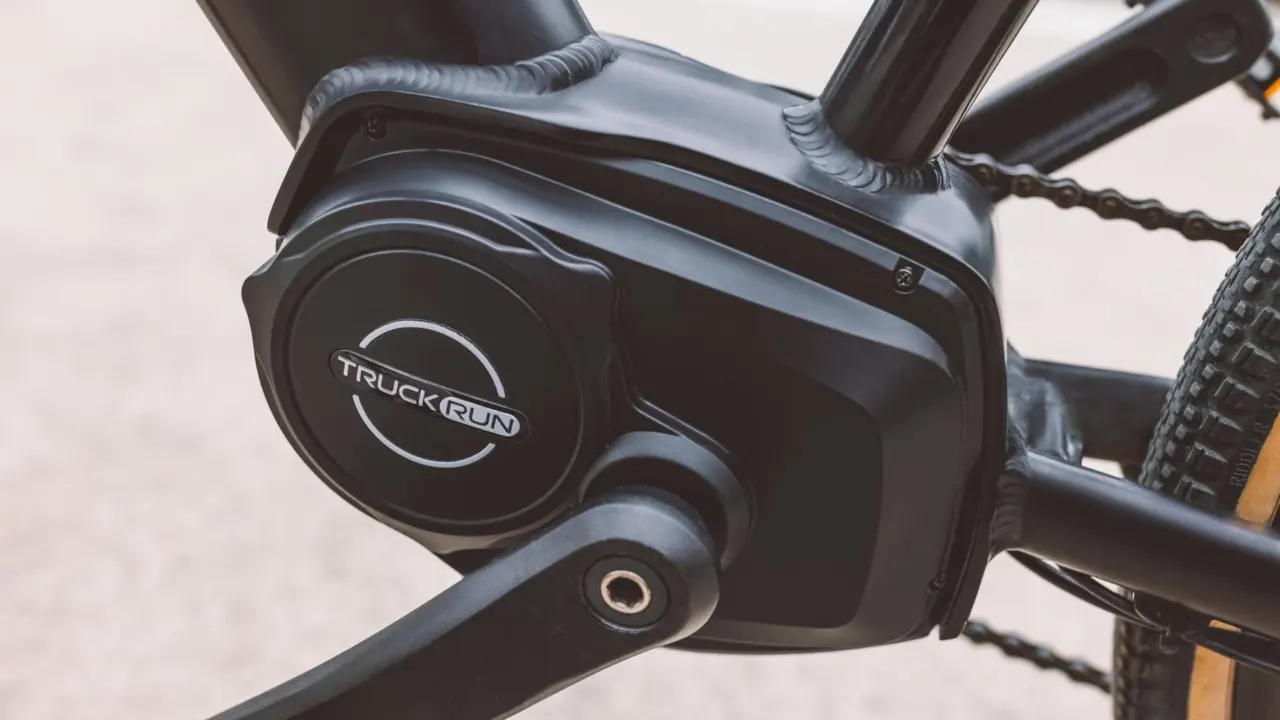
A mid-drive motor mounts at the bottom bracket, the point where the pedal cranks pass through the frame. Heybike states that because of this mounting, the motor feeds power to the rear wheel through the chain. Its low position in the frame is what lets it act on the crank instead of on a wheel.
Why the bike’s own gears matter
The mid-drive does not carry its own separate gearbox for the wheel. As Cycrown puts it, it uses the bike’s gears to amplify the motor’s power. The cassette is a set of cogs on the rear wheel, and the derailleur guides the chain across them, so a low gear multiplies the push at the pedals and a high gear suits faster, lighter riding.
This is why a mid-drive rewards correct gear choice. The same motor feels very different in an easy gear on a climb than in a tall gear at the same speed, because the gearing sits between the motor and the road.
Torque sensor and assist
Most mid-drive motors use a torque sensor, which Heybike says offers a smoother riding experience than a cadence sensor. A torque sensor reads how hard the rider pedals, so assist follows effort instead of simply switching on when the cranks turn. That is why a mid-drive can feel more natural on a hill than a motor that reacts only to crank rotation.
For a sense of scale, Heybike describes its ALPHA model as having a 500W Mivice X700 mid-drive motor whose components work with both the torque and cadence sensor to deliver up to 105 N·m of torque. That is one manufacturer’s rating for one system, not a typical value for every mid-drive, so compare the stated torque of each model being considered rather than assuming this figure applies.
Frequently asked questions
Does the mid-drive position change how the bike handles?
Yes. KWSS Euren says the motor sits low and central, which makes the steering more stable than a motor placed far from the frame’s centre.
Can a mid-drive power a belt as well as a chain?
Yes. KWSS Euren describes the motor’s power as going straight to the chain or belt, so either can carry the drive from the bottom bracket.
How many pedal assist modes do mid-drive bikes usually have?
Heybike says most mid-drive electric bikes have three pedal assist modes: Low, Medium and High. The rider picks the level, and the sensor input shapes how the motor responds within it.