Pedal assist is the stronger default in the throttle vs pedal assist ebike choice: it travels farther per charge and is less often restricted. Choose a throttle only if you want motor power without pedaling and local rules allow it.
Throttles are commonly found on e-bikes with hub motors at the rear, so this decision often overlaps with motor type. Our hub motor vs mid drive comparison covers that side.
Throttle and pedal assist side by side
The two controls differ in what starts the motor, how much work you do, how far a charge lasts and how likely a local rule is to apply.
| Criterion | Pedal assist | Throttle | Planning use |
|---|---|---|---|
| What starts the motor | The motor turns on when you pedal | You operate a thumb lever, button or twist grip, with no pedaling needed | Decides whether the bike can move without any effort from you |
| Share of the work | You contribute more effort | The motor provides 100% of the power while the throttle is used | Shows how much of the ride the battery carries |
| Range per charge | Typically farther on a single charge | Throttle-only riding can drain the battery faster, especially at high speeds | Favor pedal assist for range-led riding |
| Rules | Often remains unrestricted | Some regions ban or limit throttle use | Check local rules before paying for a throttle bike |
These comparisons draw on Denago’s explanation of pedal assist versus throttle and Victrip’s pedal assist and throttle comparison.
How each control asks for power
Pedal assist
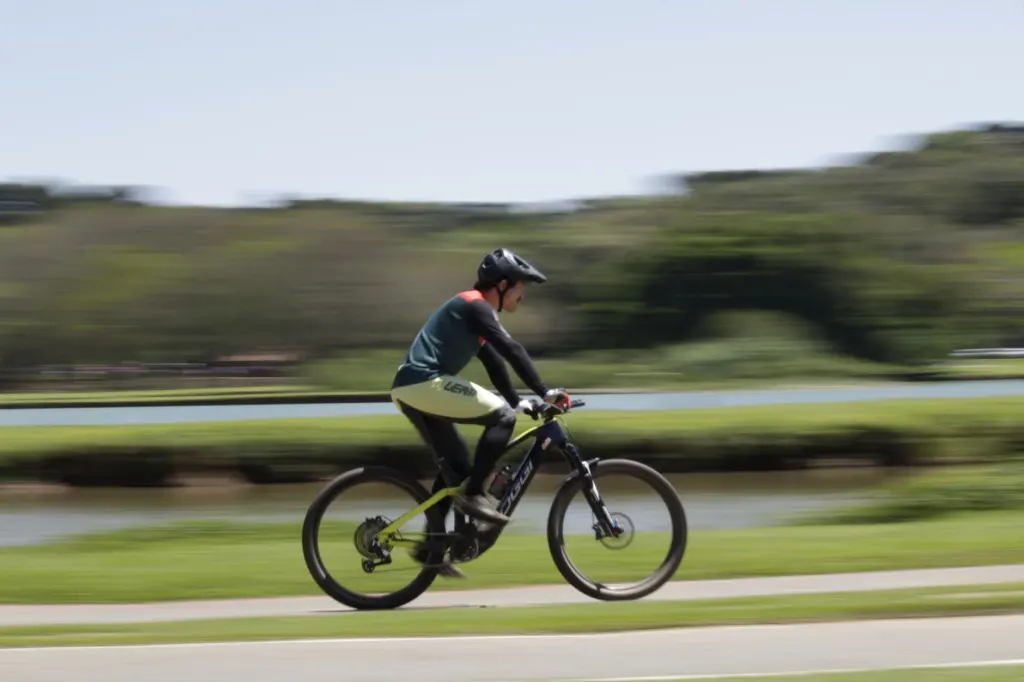
Pedal assist uses an electric motor that turns on when the rider is pedaling. A cadence or torque sensor signals that you are pedaling, and the motor responds. Stop pedaling and the help stops with you. That link between effort and power is the main reason pedal assist feels like an enhanced bicycle rather than a small motorbike. How the bike detects your pedaling is a separate decision, and our guide to torque sensor vs cadence sensor ebike setups covers it.
Throttle
In throttle mode the motor can be used without the rider pedaling at all. You turn the motor on and off with a thumb lever, button or twist grip. This suits starts from a standstill, tired legs and any moment when you simply want to move. It also changes how the bike is treated by the rules and by the battery, as the later sections show.
Whichever control you use, your request travels to the motor through the controller. Our ebike controller explained guide describes that part of the system.
Thumb throttle vs twist throttle
Throttles come in two common hardware styles: a thumb lever and a twist grip. Twist throttles come in half and full versions, and thumb throttles sit alongside them as the other mainstream option. Some bikes use a button instead, as Denago notes.
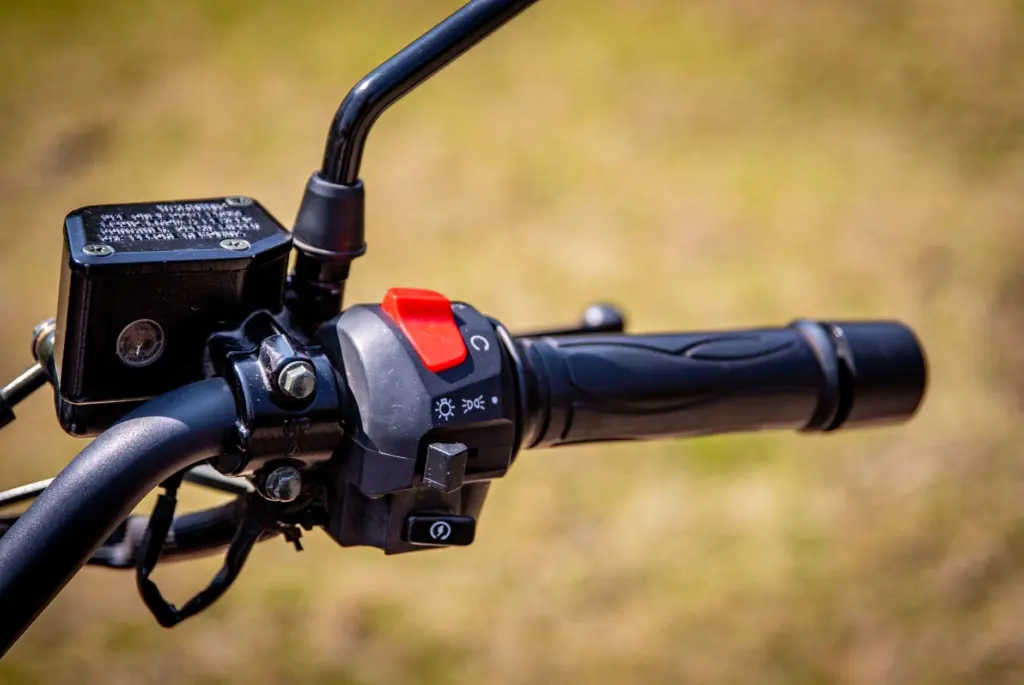
- Thumb throttle: a lever you push with your thumb. It suits riders who like a distinct, deliberate control that is separate from the grip itself.
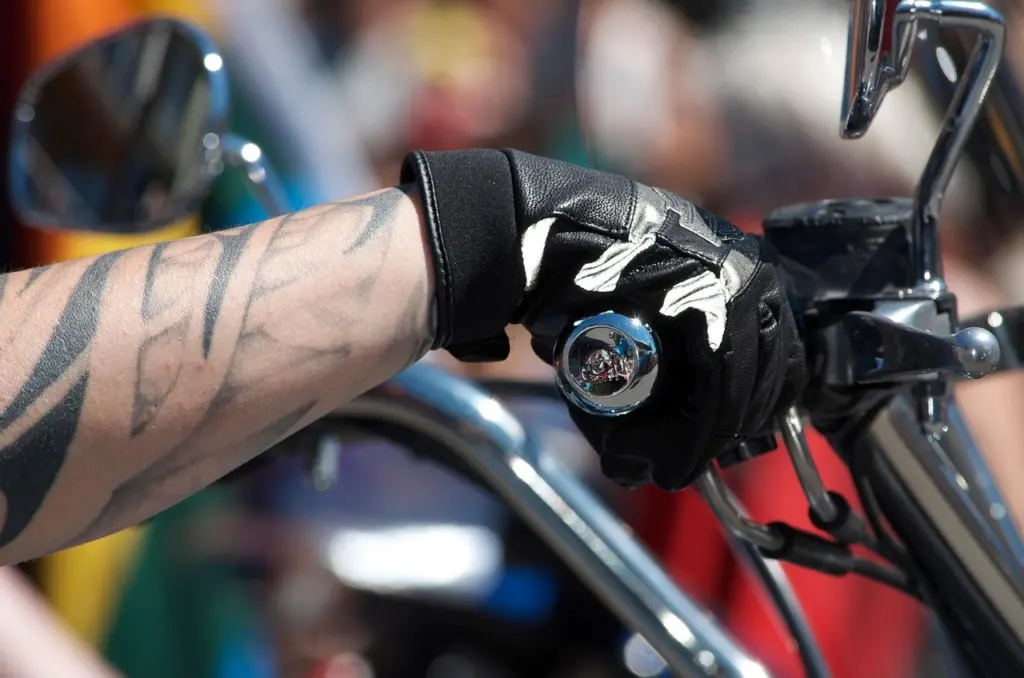
- Twist throttle: a grip you rotate. It suits riders who prefer to command power with a wrist movement, and the half-twist version leaves part of the handlebar as an ordinary grip.
- Button: a simpler on and off style input, less common than the other two among the options listed above.
Neither design is better in general. For the overall throttle versus pedal assist question, Momentum’s verdict is that there is no clear winner, and the same reasoning applies to the hardware: the better choice depends on the individual rider. Hold both types in your hand if you can before you buy, and pick the one that is comfortable to operate for long periods.
Pedal assist levels and the display
Assist level is the setting that controls how much help the motor gives while you pedal. The degree of assistance is usually adjustable and viewed via a small LED or LCD panel on the handlebar, which is the display on most bikes.
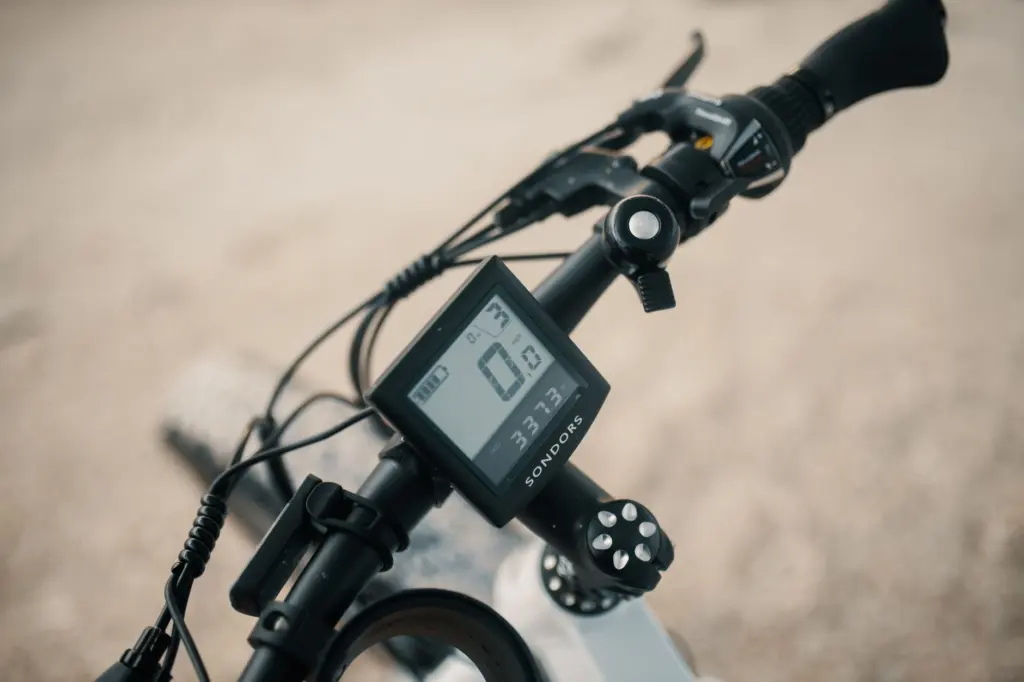
Level counts differ by model. E-bike models commonly offer settings from 0 to 5, while KBO notes that some bikes have a three-level option and others a five-level option. Because the scale is not uniform, a level number on one bike is not a reliable guide to what the same number delivers on another.
What the levels actually change is power use. As a rule of thumb, the higher the pedal-assist level, the more power is used up, and range falls with it. The practical conclusion is to ride in the lowest level that suits the conditions and save the top levels for when you need them. A throttle has no such steps: it is a direct request for motor output whenever you press or twist it.
Battery use
Yes, a throttle can drain the battery faster, particularly when it is the only thing driving the bike. Using a throttle means the electric motor provides 100% of the power, and throttle-only riding can drain the battery faster, especially at high speeds.
Pedal assist bikes typically travel farther on a single charge because the rider contributes more effort. Momentum puts it as an extended range per charge, as the motor doesn’t bear the sole responsibility for power. The published comparisons describe the direction of the difference rather than a mileage figure, so treat any exact range claim for your own bike with caution and expect it to vary with speed and how much you pedal.
For range-sensitive riding, treat the throttle as an occasional tool rather than your main input, and keep the assist level low when you are pedaling.
Legality and e-bike classes
Whether a throttle e-bike is legal where you ride depends on your jurisdiction, so check before buying. In the United States the class framework sets the basic split, and most states adopt it with their own variations.
- Class 1: assists while pedaling, up to 20 mph.
- Class 2: adds a throttle while keeping the 20 mph cap.
- Class 3: assists while pedaling, up to 28 mph.
Those class descriptions come from a US class rules explainer. The same source adds that many jurisdictions treat Class 3 differently from Classes 1 and 2, with age, helmet or path restrictions. Separately, some regions ban or limit throttle use for safety reasons, whereas pedal assist often remains unrestricted.
In practice, if you plan to ride on shared paths or in several areas, read the state and local rules for the exact paths you use. A pedal-assist-only bike carries the lowest exposure to throttle restrictions, while a throttle bike needs a deliberate check of where throttles are allowed.
Choosing between them
- Choose pedal assist for range and fewer restrictions. It stretches a charge, keeps you contributing effort and is the safer bet where throttle rules are uncertain.
- Choose a throttle if you want to ride without pedaling. It makes sense when you want the motor to do all the work at times and your local rules permit it. Class 2 is the class that adds it.
- Choose by hand feel for the hardware. Thumb lever or twist grip is a comfort decision, not a performance one. Try both.
- Treat faster pedal-assist classes as a rules question first. Class 3 brings the extra age, helmet or path conditions noted above, so confirm them before you rely on that speed.
Frequently asked questions
Can one e-bike have both a throttle and pedal assist?
Yes. Some e-bikes have both throttle and pedal assist modes, and Momentum notes that throttle e-bikes double as regular pedal assist e-bikes.
What does the lowest pedal assist setting mean?
The lowest pedal assist setting means no assist. On bikes with the common scale, the higher settings step up the amount of motor help, as Denago describes.
Is a pedal assist only ebike a Class I bike?
Often. A pedal-only arrangement is common on e-bikes labeled Class I, but the exact rules come from your own state or region.