Are ebike conversion kits legal? Yes, if the finished bike stays within local limits: usually 250 W in Europe, 750 W in the US. Exceed them and it may count as a motor vehicle.
The bicycle electric conversion kit guide covers choosing hardware. This page covers the rules that decide whether the bike you build can be ridden like a bicycle.
Why the finished bike is what gets judged
A conversion kit is not assessed as a loose part. The law looks at the bike that results, and the person who builds it carries the responsibility. In the UK, a rider who fits a kit is legally the manufacturer of the finished e-bike.
The Bicycle Association and the Association of Cycle Traders issued a joint statement in March 2025. As reported by Cycling Electric, it says anyone who supplies parts and converts a bike into an e-bike is legally responsible for its safety. Conversions are therefore not treated more gently than factory e-bikes, and the duty sits with whoever does the fitting.
None of this makes kits illegal. The same report notes that plenty of kits can be legally fitted. The question is whether the motor, the speed behaviour and the controls on the finished bike match the rules where it will be ridden.
The method of fitting is secondary. Whether you follow a guide on how to install a mid drive ebike kit or bolt on a hub motor, the finished bike faces the same tests: motor power, assisted speed and how the motor is controlled.
Motor wattage and speed limits by region
Rules for a converted bike rest on two numbers. One is the motor wattage limit, the cap on motor power. The other is the assisted speed limit, the speed at which the motor must stop helping. The table compares what the supplied guidance gives for each region.
| Region | Motor power | Speed limit | Throttle | Planning use |
|---|---|---|---|---|
| UK | 250 W maximum | Assistance cuts out at 15.5 mph (25 km/h) | Pedal assist only; no throttle-only mode | Choose a 250 W kit with a pedal sensor and no throttle-only mode. |
| Europe | Usually limited to 250 W | Kit should include a speed governor | Some areas do not allow throttles | Match the kit rating to 250 W and check local throttle rules. |
| US | Usually limited to 750 W | 20 mph speed limit in legal kit specifications | Some areas do not allow throttles | A 750 W kit suits the usual ceiling, but check state and local rules. |
These figures come from UK repair-shop guidance on road-legal e-bikes and a legal e-bike kit guide.
United Kingdom
The UK is the tightest of the three on controls. A 250 W ceiling is paired with a cut-off at 15.5 mph (25 km/h), and the motor should only assist while the rider pedals. A 250 W kit therefore suits a UK build, while a higher-powered kit bought abroad does not, however it is labelled. The ceiling is a maximum, so a kit rated below it is also compliant.
United States and Europe
A kit sized for one market should not be assumed to be acceptable in the other. State and local rules add variation, particularly on throttles. Check the rules in the place you ride before choosing a motor, and buy the kit specified for that market.
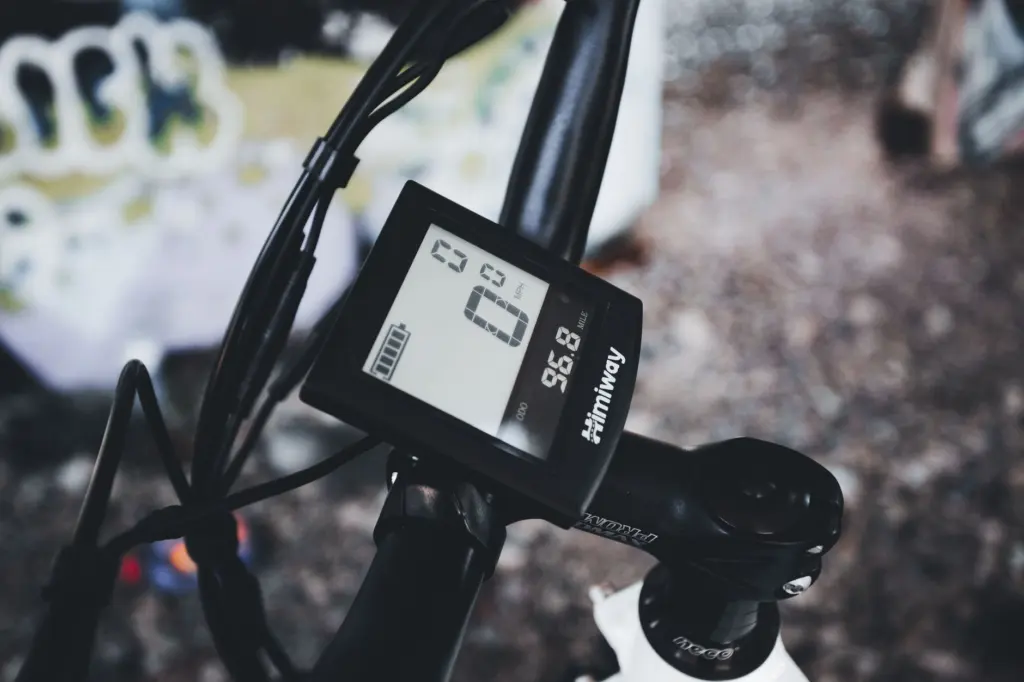
Throttle or pedal assist: how the control changes the rules
A throttle changes how a regulator may view a converted bike, because it lets the motor work without pedalling. A pedal assist sensor does the opposite. It confirms that the rider is pedalling before the motor helps.
UK guidance describes the legal bike as one where the motor should only provide assistance when you are pedalling. A kit set up with a throttle-only mode does not fit that description. It risks the moped treatment covered below.
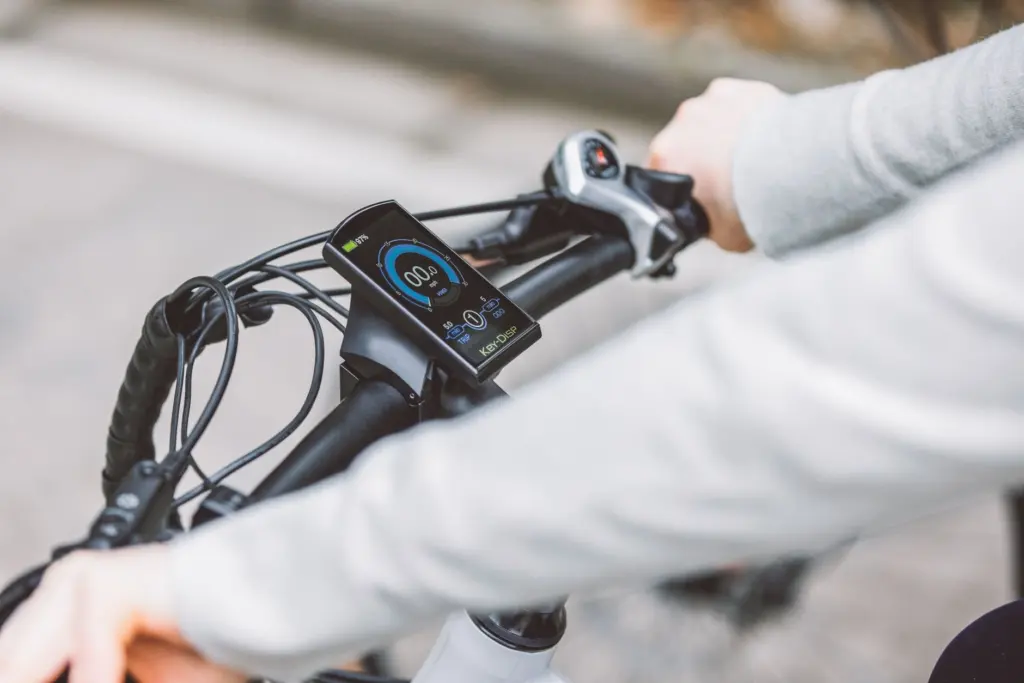
Elsewhere the position is less uniform. The legal e-bike kit guide warns that some areas do not allow throttles at all. If you are unsure of your local rule, the lower-risk build is a pedal-assist kit, with any throttle left off until you have confirmed it is permitted.
Licence, registration and insurance
A converted ebike that stays within local limits generally needs no driving licence. According to the legal e-bike kit guide, in most places a licence is not required for e-bikes that meet local legal requirements. The same guide says bikes that exceed the power or speed limits may be classified as motor vehicles, which brings a licence and registration requirement.
The UK shows what that reclassification involves. UK guidance says a bike that breaks the rules becomes a moped or motorcycle, with insurance, a helmet, registration, a possible licence requirement and an MOT test.
This makes the legal limits a practical decision. A more powerful motor does not just add speed. It can move the bike from a cycle needing no paperwork to a vehicle needing all of it, and a licence-free commute only stays that way while the bike stays inside the limits.
What happens if a conversion exceeds the limits
The first consequence is reclassification, so the bike must meet moped or motorcycle requirements. The UK guidance adds that a non-compliant kit can be confiscated, and retailers face stiff penalties. Criminal sanctions apply to anyone found selling unsafe goods.
Scrutiny of kits is growing. Cycling Electric reports that Trading Standards is taking a regional interest in the spread of conversion kits. The UK guidance also notes that in April 2025 the All Party Parliamentary Group for Cycling & Walking launched an inquiry into “dangerous” kits.
For a rider, the practical risk is a bike that cannot be used legally on the road, combined with the responsibility of being its manufacturer. Buying a kit that matches your local wattage and speed rules from the start is cheaper than undoing a non-compliant build.
Choosing a kit that stays legal
Work through these steps in order before buying, especially for a heavier build such as a fat tire ebike conversion kit, where extra weight tempts riders to chase more power.
- Find the local rule. Identify the limit that applies where you ride, since the UK, Europe and US differ and some areas add throttle restrictions.
- Match the motor rating. Compare the wattage on the motor’s rating plate with that limit, and treat the limit as a ceiling rather than a target.
- Choose the control. Pick a pedal assist sensor as the default. Add a throttle only where it is confirmed to be allowed.
- Keep the paperwork. Retain purchase records and any compliance marking supplied with the kit, because you are responsible for the finished bike.
Frequently asked questions
Does converting a bike affect its warranty?
Often, yes. Cycling Electric reports that modifying equipment often invalidates the original warranty, so check the donor bike’s terms before fitting a kit.
Does a kit need a speed governor?
The legal e-bike kit guide advises making sure the motor has a speed governor that limits top speed. This is how a kit stays inside the speed limit for its region.
What should a shop have in place before fitting my kit?
According to Cycling Electric, a shop converting bikes needs product liability insurance specifically citing the manufacture of e-bikes. It also needs UKCA or CE marking evidence, kept for at least 10 years. Ask a shop to confirm both before it works on your bike.
Could the UK rules on conversion kits tighten?
Scrutiny is active. A parliamentary inquiry into “dangerous” kits began in April 2025, and Trading Standards has shown regional interest. Check current official guidance for your region before buying a kit.