Quick answer: The most practical electric conversion kit for mountain bike use on a hardtail is a hub motor wheel matched to your wheel size and brake type. Go for a rear motor unless your fork maker confirms a front one.
This page covers what is specific to mountain bikes. For the wider picture across bike types, see our bicycle electric conversion kit guide. If you are new to the idea, start with what is an electric bike conversion kit. A small-wheeled bike has different constraints, covered in our folding bike electric conversion kit guide.
Hub motor or mid-drive for a hardtail
A hub motor is the best starting point for most hardtail conversions because it lives inside the wheel and leaves your existing drivetrain alone. E-BikeKit states that it builds its conversion systems around hub motors, combining them with cadence or torque-sensing pedal assist and 48V power. It also lists kits for mountain bikes among its conversion categories.
Hub motor
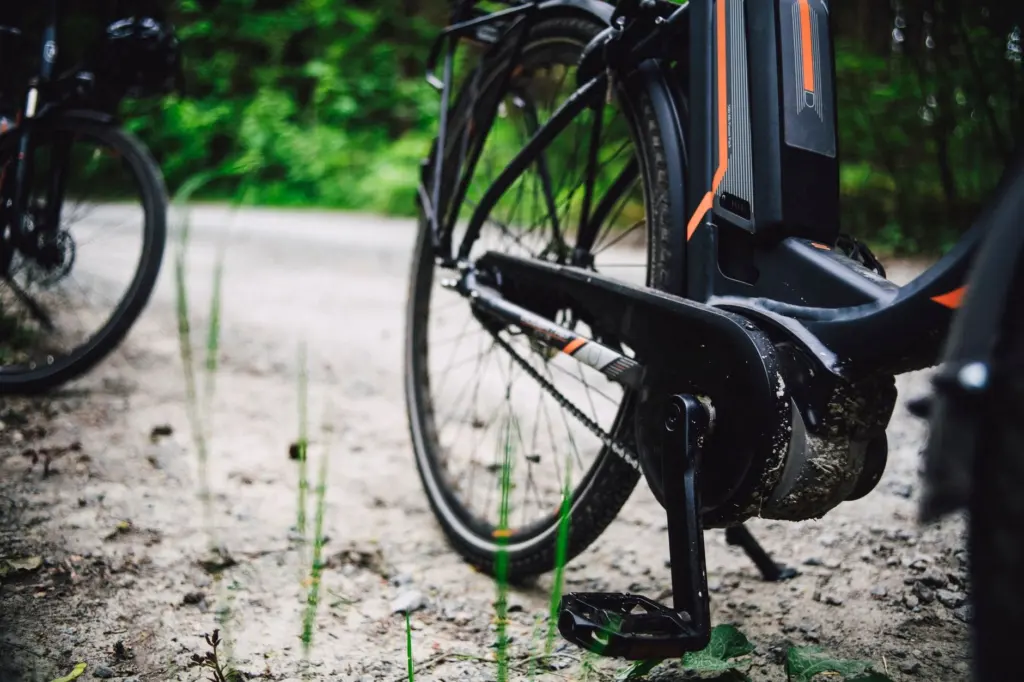
A hub kit means a motor wheel, a controller, a battery and a way to command assistance. Because the motor is in the wheel, the chain, cassette and derailleur carry only your own pedalling. That suits riders who want to keep a drivetrain they have already set up.
Mid-drive motor
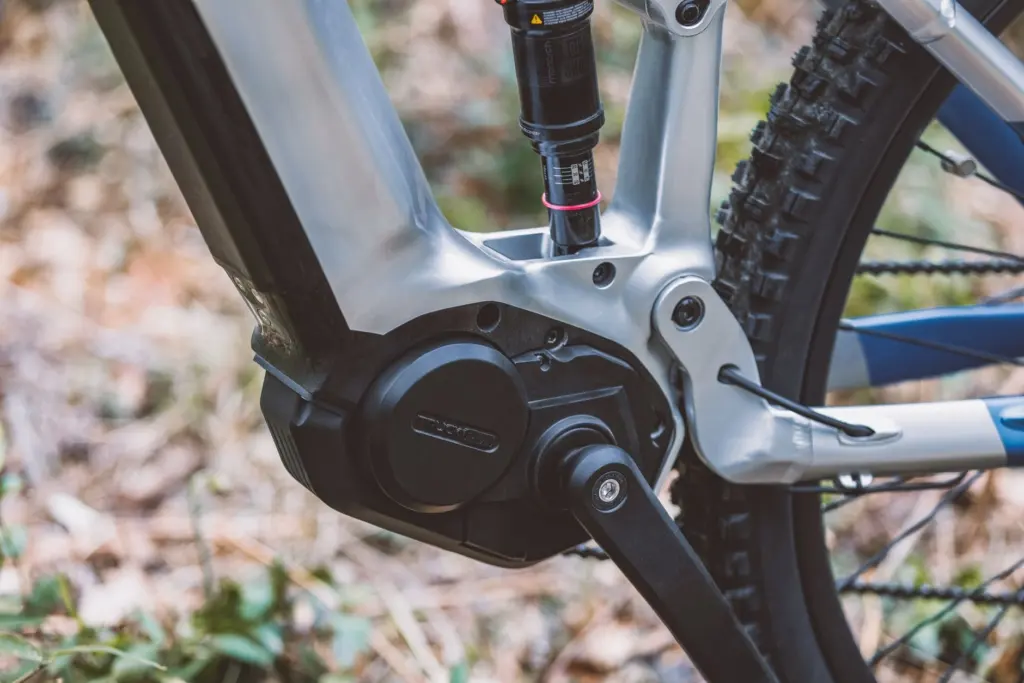
A mid-drive motor sends its power through the bike’s own chain and gears. E-BikeKit notes that routing 750W+ through your bike’s chain and gears comes at a cost. That cost falls on components you already own, so a mid-drive makes most sense when you accept that load in return for what the motor placement offers.
Pedal assist or throttle only
Control style matters as much as motor position on a trail. The ebikes.ca barebones kit is a simple throttle-controlled bike with a basic display or none at all. It has no pedal-assist or torque sensor, and its regenerative braking is fixed. If you want assistance that follows your pedalling over roots and rocks, choose a kit with a cadence or torque sensor. Choose throttle-only when you want the lowest-cost, simplest build.
Kit options at a glance
| Option | Suits | Trade-off | Planning use |
|---|---|---|---|
| Hub kit with pedal-assist sensor | Riders who want assistance that follows their pedalling | Needs a wheel that matches your bike and brakes | Shortlist first for a hardtail; look for 48V-class systems with cadence or torque sensing |
| Barebones throttle kit | Simple, low-cost builds | No pedal assist or torque sensor; fixed regenerative braking | Front barebones kits start from USD 375.75 |
| Mid-drive | Riders who accept extra load on the chain and gears | 750W+ through the drivetrain comes at a cost | Weigh against the condition of your existing drivetrain |
| Front hub motor | Bikes where the fork maker permits a motor wheel | The motor sits in the suspension fork | Get the fork maker’s confirmation before ordering |
Kit descriptions in this table come from E-BikeKit and the ebikes.ca kit range.
Front wheel kits and suspension forks
A front wheel kit is a mainstream option, but it is only safe on a suspension fork when the fork manufacturer allows a motor wheel. The ebikes.ca range lists 34 front and 32 rear kits, so front motors are common. Availability does not mean your particular fork is suitable.
Treat the fork maker’s official guidance as the deciding authority. Work through these points before buying:
- Fork guidance: check whether the fork manufacturer permits a hub motor in its dropouts, and under what conditions.
- Dropout and axle match: the motor axle has to fit the fork’s dropout slot or axle bore. It replaces the wheel’s own axle, so a wheel that fits your fork does not guarantee a motor wheel will.
- Fallback: if the fork maker will not confirm a front motor, choose a rear kit and keep the fork carrying only its normal load.
Disc brakes and axles
Disc brake compatibility is a build detail you settle before paying, not after the wheel arrives. HPC’s order process asks you to specify at checkout if you require a V-brake compatible rim, which shows that the wheel is built around a chosen brake type. Ask any seller to confirm in writing that the wheel will take your disc rotor mount style.
The axle matters just as much on a trail bike. HPC describes its gearless hub motor as having robust 14mm axles for offroad abuse. A stout motor axle is good for rough terrain, but it must still seat in your frame’s or fork’s dropouts. If you ride with a thru-axle, confirm the motor wheel’s axle standard against your bike’s before ordering. If the wheel does not seat, compare the axle with the dropout rather than forcing it.
Wheel size: do 26-inch wheels fit?
Yes, 26-inch mountain bike wheels fit conversion kits, though the choice varies by maker. HPC offers its hub motor kits in 26, 27.5 and 29 inch options and tells buyers to choose the wheel size that matches their bike. Read the size off your current wheel rather than assuming it from the frame’s age or style.
Matching size is only the first filter. The motor wheel also has to suit your brake type and dropouts, as described above. A kit sold in your wheel size can still be wrong for your bike.
Power and torque for steep hills
For steep hills, pick a kit sold as high-torque and sized with enough voltage behind it. HPC positions its Striker high-torque hub motor as best for hills, trails and heavy loads, with speeds up to 36 MPH. It also states that its 2000W system gives 2.5+ HP on a 52V battery, with power options running from 2000W to 5000W.
Where a maker publishes a torque rating in Nm, use it to compare kits for climbing. Where it quotes only watts and voltage, compare those on the same wheel size. Mid-range kits are the norm in the wider market. In the ebikes.ca range, 17 kits fall in the 500-1000 W band and 21 in the 600-1200 W band, against 8 in the 1000-2000 W band. A higher-output kit is therefore a deliberate choice for sustained climbs or heavy loads, not the default.
Climbing demands a lot from the battery as well as the motor, which brings us to sizing the pack.
Battery choices for trail use
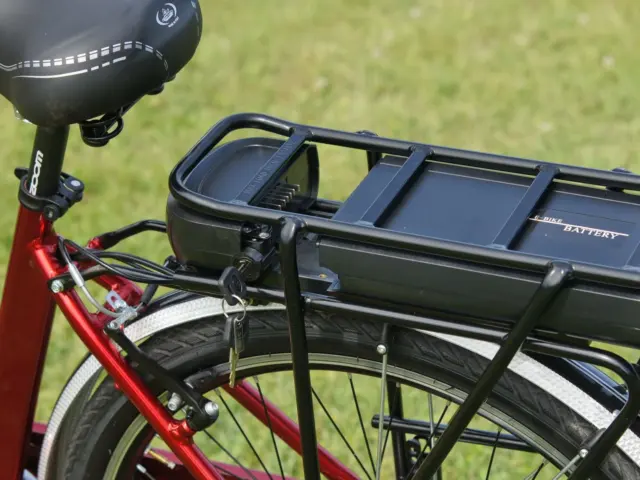
The lithium-ion battery sets both your system voltage and how much frame space you need. HPC lists an 8 lbs battery on a 52–78 V system. E-BikeKit sells a 48V 15Ah Li-ion downtube battery at a regular price of $678.00.
A downtube pack suits a frame with room in the main triangle, so check that space on your hardtail before choosing one. Use the voltage the kit maker specifies for its controller and motor. Do not mix a battery from one system into another on the strength of a similar-looking connector.
Troubleshooting fit problems
- Wheel will not seat: the motor axle and the dropout do not match. Stop and compare them rather than forcing the wheel in.
- Rotor will not mount: the wheel’s rotor interface differs from your brake. Return to the seller and ask for the correct wheel build.
- Weak on climbs: compare your kit’s power and voltage against a high-torque option for your wheel size, and check that the battery matches the system voltage.
- No pedal-assist feel: a throttle-only kit has no pedal-assist or torque sensor, so it will not follow your pedalling. Choose a sensor-equipped kit instead.
Frequently asked questions
Can I ride a high-power kit on public roads?
Check local rules first. HPC states that all systems above 750W are for offroad use only.
Will a standard frame take the largest kits?
Not at the top end. HPC warns that standard bike frames will not hold up past 5,000W, which is the ceiling of its power options and not a target.
How far can a kit go on one charge?
It depends on the battery you configure. HPC lists a 100+ mi custom range for its system, so treat range as something you specify with the pack, not a fixed figure.
What comes in a complete kit?
It varies by kit. The ebikes.ca CA3 bundles an optional downtube battery, an internal Baserunner controller and the Cycle Analyst display, while barebones kits are lighter on parts.