| Reader situation | Route | Key values | Planning use |
|---|---|---|---|
| The folded bike must stay light | Quick-release drive unit (Bimotal Elevate) | About 8.8 lbs installed; battery space in the frame 5.6 x 3.5 x 3.3 in | Suits a folder with hydraulic disc brakes and enough room in the frame. Rules out mechanical brakes. |
| Your fork and wheel are small | 20-inch front hub motor wheel (eBikeling) | 100 mm front dropout; motor/wheel 8 lbs; rim outer diameter 419 mm | Measure the fork spacing before ordering anything. |
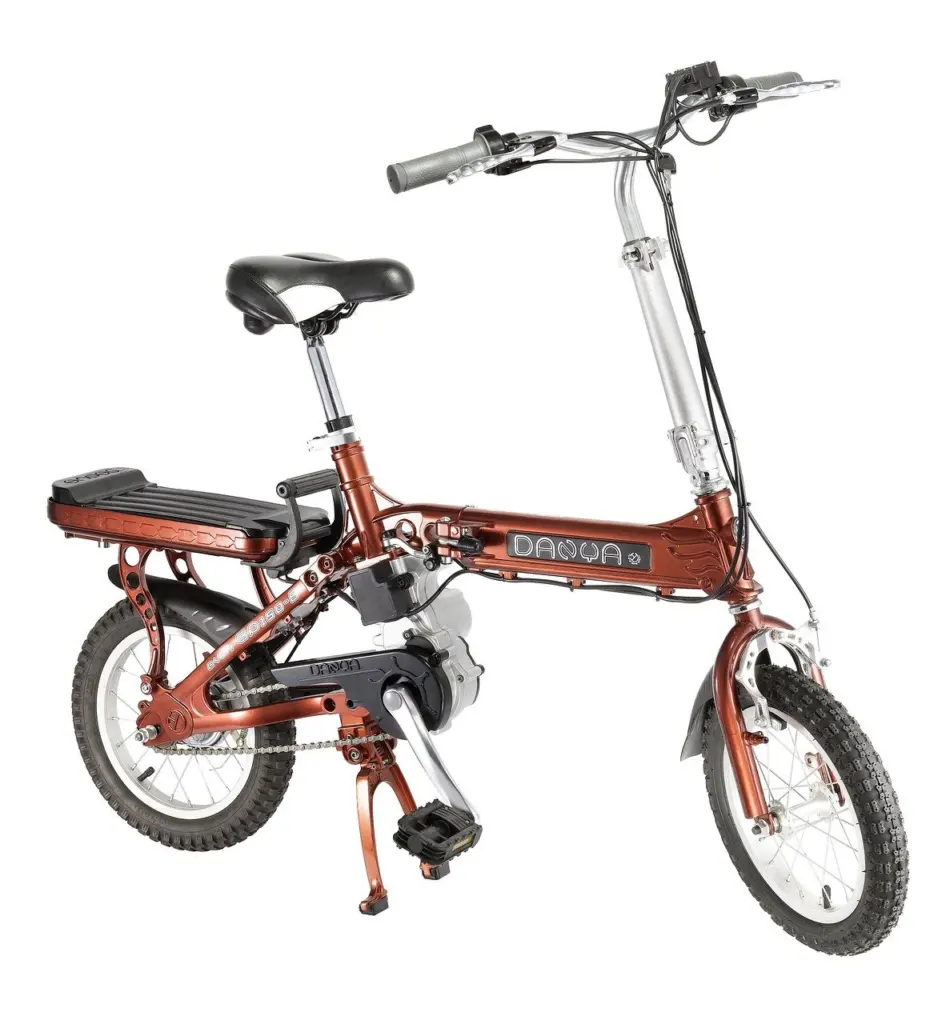
| You would rather buy it ready built | Complete folding bike with motor (eBikeling) | Net 70.5 lbs; packed size 40 x 19 x 32 inch | Only sensible if you can lift and store that much bike. |
Figures come from eBikeling’s kit listing and Bimotal’s Elevate product page.
A folding bike electric conversion kit works when the fork dropout width, wheel size and brakes match the kit, and when the added weight still lets the bike fold and carry. Not every folder qualifies.
For how kits work across all bike types, see our bicycle electric conversion kit guide. This page covers only what changes when the bike has to fold.
When the folded bike must stay light
If you carry the bike on trains, up stairs or into an office, added weight is the cost that matters most. Two approaches keep it down: a small removable drive unit, or a wireless kit built for foldables.

Quick-release drive unit
The Bimotal Elevate is a compact, quick-release motor that the maker says turns an ordinary bike into an electric one. The whole system installed weighs about 8.8 lbs (4 kg), split between a drive unit of 3.3 lbs and a battery of 3.4 lbs. The battery goes inside the main frame, which needs space of 5.6 x 3.5 x 3.3 in.
The same page says the unit can come off in seconds and move between bikes. That makes it a practical choice if you want to remove the motor before folding. It is not universal. The maker lists compatibility with hydraulic disc brakes and a rear brake mount outside the rear triangle. It says Elevate will not work with mechanical brakes, whether rim or disc, with a rear brake mount inside the triangle, or with 2-piston hydraulic brakes. Check the brake type before anything else.

Wireless kits made for foldables
E-Switchy describes its S1 kit as fully wireless and says that makes it well suited to foldable bikes, tricycles and cruisers. Fewer cables suits a frame that bends in the middle, because there is less to route across a hinge. The S1 is the kit in this guide that the maker explicitly markets at folders.
When you are swapping the wheel
A motorised wheel replaces your existing wheel, so the size of the wheel and the width of the fork decide whether it fits. Treat the fork measurement as the first gate.
Front hub motor in a 20-inch fork
eBikeling lists front 20-inch options, including a 20-inch fat version, with a 100 mm front dropout for the 500W unit. That 100 mm figure is the fork dropout width the wheel’s axle must fit. Check yours with a ruler before you buy. The 20-inch unit has an outer rim diameter of 419 mm and a listed motor/wheel weight of 8 lbs. That figure includes the wheel, so compare it with the weight of the wheel you take off. If you are heading toward wider tyres, our fat tire ebike conversion kit guide covers that side.
A HOVSCO conversion guide says front hub motors are easier to install and better for flat terrain, while rear hubs give better traction. It also says the motor axle must fit your dropouts and that you should check brake compatibility. Front is the easier fit on a small folder, but it comes with one trade-off (see below).
Rear hubs and torque steer
A rear hub keeps the pulling force behind the steering, and eBikeling’s rear 20-inch unit needs a 130 mm rear dropout. Folders often have a narrow rear triangle that is also tight around the hinge, so confirm that width as well. Bimotal’s own advice shows the front-wheel trade-off. Its unit can go on the front wheel, but the maker warns you need to be aware of torque steer, and it recommends rear drive. If you ride a lightweight folder with a short wheelbase, treat a front motor as a flat-ground choice.
Closed thru-axle forks
Some folding bikes have closed thru-axle forks rather than open dropouts. E-Switchy treats front wheel kits for closed thru-axle forks as a special order item, so open dropouts are the standard fit. Ask the maker before paying if your fork closes around the axle.
Compact folders such as a Brompton
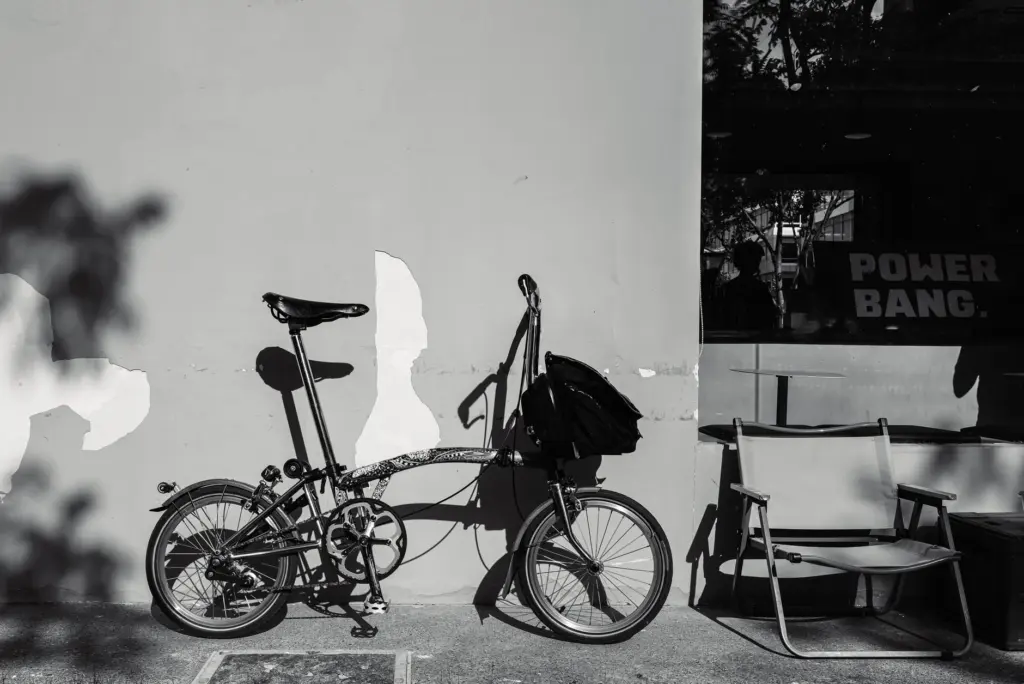
Anyone planning to convert a Brompton to electric faces the same checks as any other small folder: wheel size, fork dropout width and brake type. Run those against the kit’s published measurements instead of assuming a general kit will fit. Brake type matters most for drive units like Elevate. Wheel kits depend most on the fork gap.
When you want a complete electric folder
Some buyers find a single product less work than matching parts to a frame. eBikeling’s 1200W listing describes a 48V 750W rear brushless geared hub motor, so this route is rear-driven, not a front hub.
Weight of a complete folding bike with motor
The same page lists a gross weight of 81.6 lbs and a net weight of 70.5 lbs for the complete folding bike with motor. That is far above the 8.8 lbs of the Bimotal system. If your daily routine includes lifting the bike, that difference matters more than power. A full-power folder suits a rider who wheels it rather than carries it.
Packed size
The listing gives a packing size of 40 x 19 x 32 inch. Use this to check storage space, such as a car boot, cupboard or hallway, before ordering. A boxed size is not the same as the folded size once built, so measure the space with room to spare.
When storage and stairs decide
A conversion changes how a folder packs as well as how it rides. Battery position, controller and hinge clearance all affect that.
Where the battery goes
On Bimotal’s Elevate the battery goes inside the main frame, which is only possible if the frame has the space listed above. Wireless kits like the S1 avoid cable runs altogether. Otherwise, battery placement is a bolt-on decision for each bike. Rear racks and frame mounts both work in principle, but check that nothing sits across the line of the fold.
Controller and wiring
The motor controller is the part that manages power flow between battery and motor. GYROOR’s guide to 20-inch kits says they commonly use hub motors, lithium-ion batteries and controllers. Every extra component is something to mount where the bike folds, so a kit with fewer separate parts tends to suit a folder better.
Frame hinge and folded size
The frame hinge is the weak point of any folder conversion. Keep cables, battery and mounts clear of it, and be ready for the folded bike to be larger or heavier than before. If the unit can be removed quickly, as Elevate’s can, you can take it off before folding and keep the original folded size.
When you are choosing between converting and buying
Convert if you already own a folder you like, its brakes and fork pass the checks, and you want to keep the added weight low. Buy a ready-made folding ebike if the bike fails those checks, or if you would rather have one product than a set of matched parts.
Not every folding bike can be converted. A removable drive unit gives you flexibility, because it can move between bikes, but it needs the right brakes. A wheel swap has fewer brake restrictions and more fork restrictions. A finished folder avoids both sets of checks, but the listed net weight of 70.5 lbs is the price. If your main bike is a full-size one rather than a folder, the electric conversion kit for mountain bike guide is the better starting point.
Frequently asked questions
| Question | Answer |
|---|---|
| How long does a small 20-inch kit take to charge? | eBikeling lists a charging time of 4-6 hours for its 20-inch kit. Plan to charge it overnight or at your desk. |
| What does a kit usually include? | The HOVSCO guide lists the motor, battery, controller, display, brake cut-off levers and a wiring harness. |
| What does a wireless kit for foldables cost? | E-Switchy listed its S1 kit with LCD display at a sale price of $679.95 against a regular price of $839.00. |