Scenario: a steel-fork commuter bike needs a motor. In a front hub vs rear hub ebike conversion, the front wheel is the easier install, but the rear wheel is the safer fit on traction and handling.
This comparison looks only at wheel position. For the wider kit decision, start with the bicycle electric conversion kit overview. The separate question of motor type is covered in hub motor vs mid drive conversion kit.
Decision criteria before you compare kits
Wheel position decides four practical things: what the fork must withstand, how much traction the driven tyre has, how the bike’s weight is balanced, and how much of the drivetrain has to be disturbed. Work through the checks below in order, because the first two can rule the front wheel out before any other comparison matters.
- Identify the fork material. Carbon forks are excluded for front hub motors. Steel forks are the most compatible, and aluminum forks need a check against the fork maker’s guidelines.
- Measure the dropout width and note the axle type. The kit must match the dropout width and the brake type exactly, so a good-looking kit on the wrong spacing is a dead end.
- Consider where the bike will be ridden. Wet or loose surfaces put more weight on the question of which tyre gets the drive power.
- Look at the rear of the bike. A rear motor has to work with the existing cassette, hub assembly, rim and disc brake. A front kit leaves all of that alone.
- Decide how much installation work is acceptable. The front wheel is the lower-effort route, and the rear wheel asks for more fitting and checking.
Front hub and rear hub side by side
The table condenses the differences that follow from wheel position alone. It is a planning aid for the checks above, not a ranking of specific kits.
| Criterion | Front hub motor | Rear hub motor | Planning use |
|---|---|---|---|
| Installation | Generally easier to install than a rear hub or mid-drive system | More complex, because it must be compatible with the gear cassette and hub assembly | Pick the front wheel if low installation effort is the priority |
| Traction | The front tyre bears less weight than the rear, so drive power can make it slip or spin | Drive goes to the wheel that bears more weight | Favour the rear wheel on wet or loose surfaces |
| Handling | Changes power distribution; extra weight is noticeable when turning | Weight is kept off the steering axis, though the hub is heavier and larger than a standard hub | Favour the rear wheel if steering feel matters |
| Rear gearing | Cassette, chain and derailleur do not need to be disassembled | Motor and cassette must fit together | Check cassette fit before ordering a rear kit |
| Wheel and brake fitment | Must match dropout width and brake type | Larger hub can limit disc brake and rim size choices | Check brake and rim compatibility on a rear build |
The comparison draws on the Revv hub design guide and the Gyroor front-wheel conversion guide.
Front hub motors: fork stress, dropouts and axles
A front hub motor hangs its whole drive load on the fork dropouts, so the fork is the first thing to qualify. The fork material and the dropout fit matter more than the motor’s power rating.
Fork material
The Gyroor conversion guide states that carbon fiber forks should never be used with a hub motor conversion because of the risk of catastrophic failure. That makes a carbon fork a clear stop sign for a front hub kit. A bike with a carbon fork is a rear hub candidate, or a candidate for a different system altogether, such as the options in the friction drive electric bike conversion kit comparison.
The same guide calls steel forks ideal and universally compatible. It says aluminum forks can be suitable but require careful checking, so confirm with the fork manufacturer before buying a kit.
Dropout width and axle size
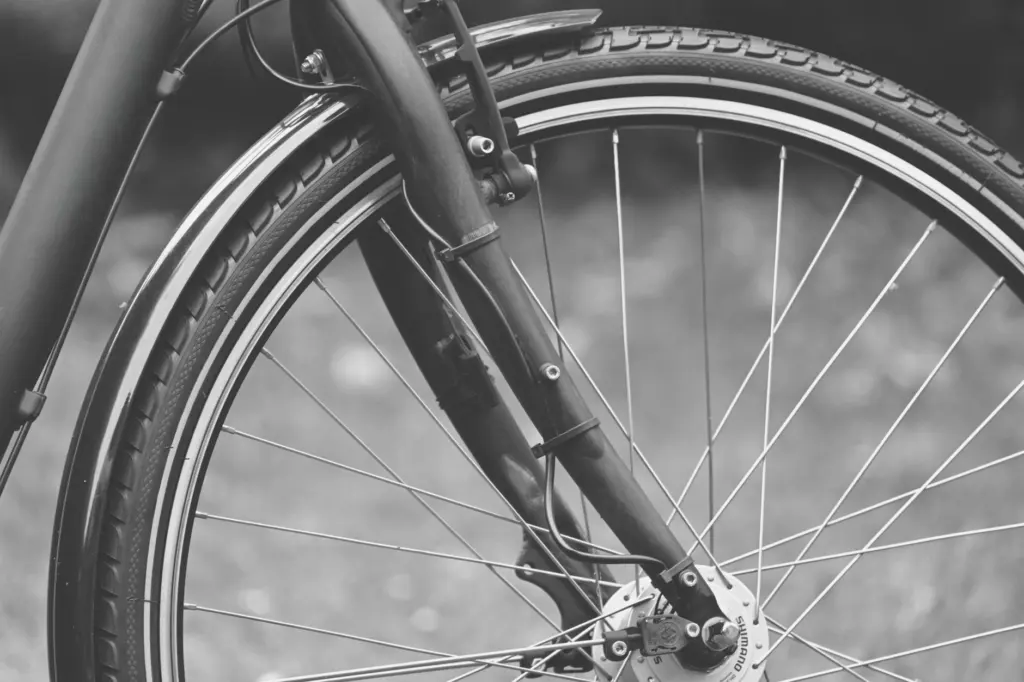
According to the Gyroor conversion guide, the most common front dropout spacing on a standard quick-release fork is 100mm, and some modern thru-axle forks are 110mm. Most front kits are designed for 9mm quick-release or 10mm solid axles. The Gyroor front hub kit guide adds that most front kits fit standard front forks, but the dropout width and brake type must be matched exactly.
In practice, measure the fork rather than assuming. A thru-axle fork may need a different kit from a quick-release fork, and a kit built for one spacing is the wrong choice for the other.
Skewers, axle nuts and torque arms
A front motor turns the axle against the dropouts every time it drives. The Gyroor guide therefore says axle nuts or the quick-release skewer must be tightened to the correct torque specification to stop the wheel loosening. Treat a skewer on a motor wheel as a fastener with a torque specification, not a lever to flick shut by feel.
Whether a torque arm is required depends on the kit and the fork. The kit manufacturer’s installation manual is the authority on that, and it also governs the aluminum-fork check described above. A kit that ships with a torque arm is a strong hint that the maker expects it to be fitted.
Traction and handling with a front motor
A front hub motor drives the wheel with the least load on it, and that single fact explains most of the handling complaints. The Revv guide says front drive changes the power distribution of the bike, which affects handling and traction. It also describes front wheel hub motor eBikes as probably the least comfortable and least safe way of fitting a motor to a bike.
Wheel slip under power
The Gyroor guide explains the mechanism. The front tire bears less weight than the rear, so applying drive power to it can cause it to slip or spin. The same guide says this calls for smoother throttle application than a rear-drive system. Riders who often pull away on wet paving, painted road markings or loose gravel should weigh this heavily.

Weight at the steering axis
Weight on the front wheel also changes how the bike steers. The Revv guide says the increased weight affects front wheel balance and is especially noticeable when turning. The Gyroor guide says adding several pounds of motor weight to the steering axis can make the front end feel slightly heavier.
The effect is a change of feel, not a verdict that every front-hub bike is unrideable. It matters most for riders who corner often, carry loads or ride in the wet. For a short, flat, dry commute on a steel fork, many riders will find the trade-off acceptable in return for the simpler installation.
Rear hub conversions: pros and cons
A rear hub motor puts the drive on the wheel that carries more weight and keeps motor weight away from the steering. That is the main reason it is the safer default when the fork or the road surface is a concern. The price is a harder fit, because the rear wheel is also where the gearing lives.
What a rear motor costs you
- Engineering complexity. The Revv guide says rear hub motors have to be compatible with the gear cassette and hub assembly, which makes them more complex to engineer than front hubs.
- Weight and size. The same guide says the weight is higher on the bike and the hub is larger than a standard hub.
- Wheel build. Larger hubs shorten the spokes for the same rim size, which makes the wheel stiffer according to Revv.
- Brake and rim choice. Revv notes that a larger hub can cause problems fitting standard disc brakes and using standard rim sizes, reducing your choices.
Cassette and gearing clearance
The rear triangle is crowded, and a motor hub must coexist with the cassette. The Gyroor guide points out the contrast with front kits, which need no disassembly of the cassette, chain or derailleur. That difference is the strongest practical argument for the front wheel if the rear drivetrain is a part of the bike you would rather not touch.
Before ordering a rear kit, check the cassette and brake arrangement against the kit manual. The motor maker’s stated cassette compatibility is the figure to match, not the general look of the rear wheel.
Who should choose which
- Choose a front hub if the fork is steel, or aluminum with the maker’s approval, the dropout width matches the kit, and the priority is the simplest installation. It suits dry, mostly paved commutes where smooth throttle use is no hardship.
- Choose a rear hub if the bike is often ridden in wet or loose conditions, if steering feel matters, or if the fork is carbon. Accept the extra fitting work and check cassette, brake and rim compatibility first.
- Look elsewhere if the bike has a carbon fork and a rear hub will not fit its cassette or brakes. The motor-type comparison in hub motor vs mid drive conversion kit helps in that case.
The most reliable verdict from the supplied evidence is conditional. The rear wheel is the safer choice on traction and handling, and the front wheel is the easier choice on installation. The fork material can override both.
Frequently asked questions
| Question | Answer |
|---|---|
| Is a front hub or rear hub conversion kit better? | Neither wins outright. Front kits are generally easier to install, while rear kits avoid the traction and steering drawbacks of driving the lightly loaded front tyre. |
| Do I need a torque arm on a front hub motor? | Follow the kit manufacturer’s manual. The supplied guidance requires axle nuts or the quick-release to be tightened to the specified torque so the wheel does not loosen. |
| Can I use a front hub motor on a carbon fork? | No. Carbon fiber forks should never be used with a hub motor conversion because of the risk of catastrophic failure. |
| Does a front hub kit mean touching the cassette? | No. A front kit leaves the cassette, chain and derailleur alone, which is why it is considered the less intimidating install. |